
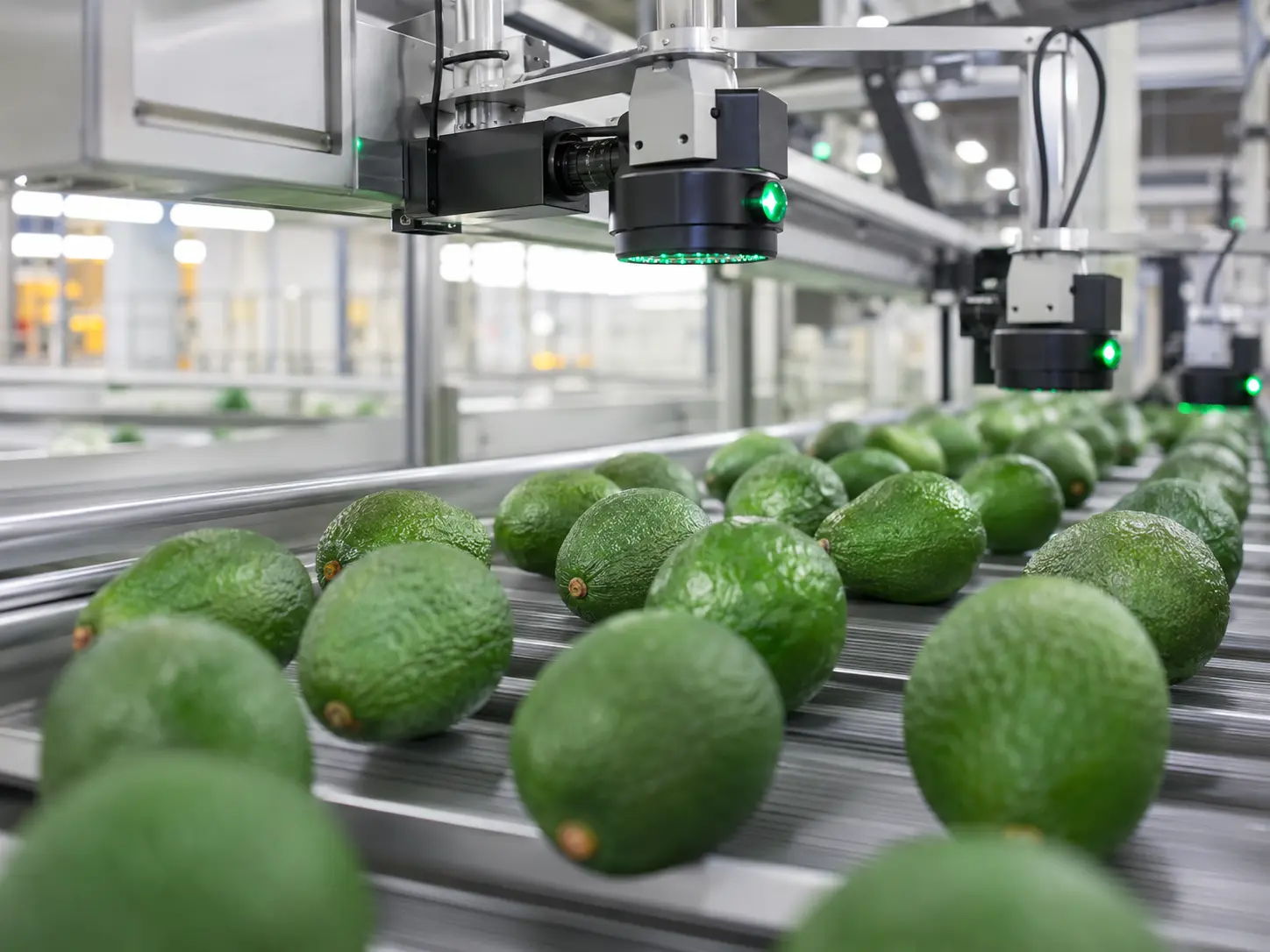
Produce grading turns a buyer specification into thousands of rapid decisions. Size, color, maturity, shape and visible defects can all affect the result. Trained inspectors remain essential, but variation in lighting, line speed, fatigue and interpretation can make consistency difficult.
Computer vision can help when it is designed as part of the quality workflow. The goal is not to produce an impressive demonstration image. The goal is to apply defined attributes repeatably, preserve evidence and route uncertain cases to people.
Define quality in operational terms
Words such as “premium,” “ripe” or “minor defect” may be understood differently across farms, shifts and buyers. Before training a model, convert the relevant specification into observable attributes.
For each attribute, document:
- the class or measurement
- acceptable and unacceptable examples
- borderline examples
- the inspection surface and camera view
- conditions that require human review
- the final authority for changing a grade
This work often improves the quality process before any model is deployed.
Control the image conditions
Computer vision depends on what the camera can see. Lighting, background, product orientation, motion blur, lens contamination and line speed can all affect performance.
A responsible pilot tests the real operating environment. It should include normal variation across time, varieties, suppliers, seasons and equipment conditions. A model trained only on ideal samples is unlikely to remain reliable on a working line.
Build representative data
Training images should reflect the products and decisions the system will encounter. Rare but commercially important defects need enough examples. Borderline cases need careful labels. If quality experts disagree, the project should resolve the specification or record the ambiguity instead of hiding it in the dataset.
Data governance also matters. Image ownership, retention and permitted uses should be agreed before collection begins.
Validate by attribute and context
One overall accuracy figure can hide operational weaknesses. Evaluation should examine each important attribute, grade class and operating condition.
Depending on the workflow, teams may review:
- false acceptance of unacceptable product
- false rejection of acceptable product
- performance by defect class
- performance by variety or supplier
- uncertain cases sent to human review
- throughput and latency
- stability under changing lighting or line conditions
The cost of each error is not equal. A quality team should choose thresholds based on the commercial and safety consequences.
Preserve human exception review
A good system knows when it is uncertain. Borderline or unusual products should be routed to trained reviewers with the relevant image and model output. The reviewer can confirm or change the decision, and that result becomes part of the audit trail.
Exception review protects quality and helps reveal where the specification, imaging setup or model needs improvement.
Connect quality back to the lot
The most valuable grading data does not end at the sorting machine. Grade distribution and defect patterns should remain connected to the lot, field, harvest and handling history.
This connection allows teams to investigate whether a recurring issue is associated with a block, crop stage, harvest team, handling step or storage condition. It turns grading from a final gate into a feedback loop.
Plan for change
Produce changes across seasons. Specifications change across buyers. Equipment and lighting drift. A quality-vision program needs scheduled review, performance monitoring and a clear process for approving model or rule updates.
The team should know which version was used for each recorded decision and when recalibration is required.
A practical pilot
Start with one crop, one inspection point and a limited set of visible attributes. Agree on the human reference process, capture representative samples and validate performance in the real line environment. Measure consistency, exception rate, review time and operational usefulness—not just model accuracy.
Make one quality checkpoint more measurable
Future Food Export can help define the attributes, evidence and validation path for a focused computer-vision pilot.